Green cleaning has a credibility problem, and it is largely self-inflicted. For years the category was full of products that smelled pleasant and cleaned poorly, alongside internet recipes that were either ineffective or genuinely unsafe. The result is a reasonable suspicion that choosing non-toxic means accepting worse results.
That is no longer true, but only if you know what to choose. This guide separates the green cleaning that works from the green cleaning that does not, explains where conventional chemistry is still the right call, and covers the indoor air quality issues that matter most in Bay Area homes.
Why indoor air quality is the real argument
The strongest case for green cleaning is not planetary, it is personal. Indoor air is routinely more polluted than outdoor air, and cleaning products are a significant contributor through volatile organic compounds released during and after use. In homes that are closed up for climate control — common across the Bay Area — those compounds linger.
Children, whose airways are still developing and who spend time close to floors, and pets, who groom residues off their paws and fur, absorb disproportionately more than adults. For households with asthma, allergies or chemical sensitivity, changing product choice often produces a noticeable improvement within a few weeks.
The green products that genuinely perform
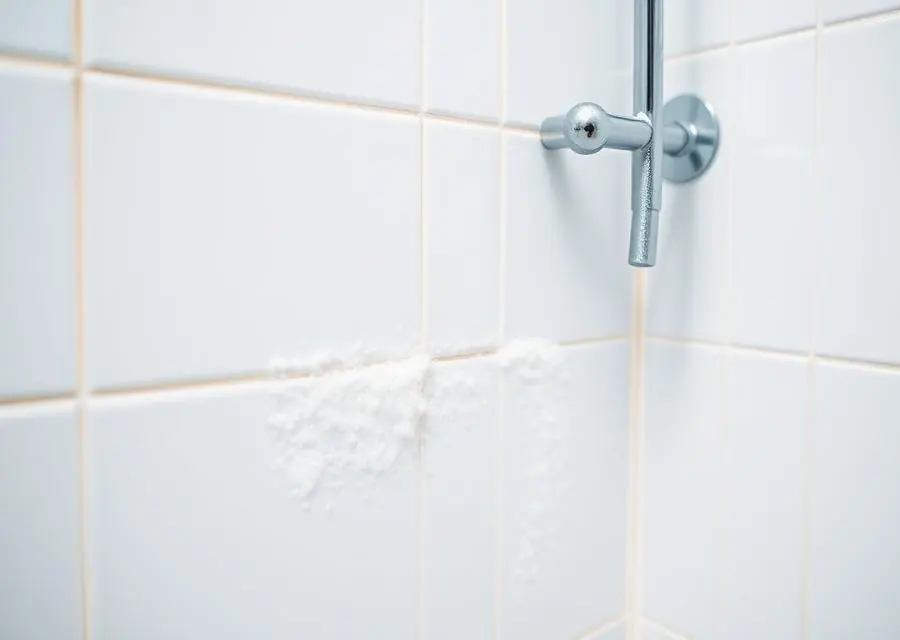
Several categories now match or beat conventional equivalents. Plant-derived surfactants handle general degreasing on counters, cabinets and floors as well as anything. Citric acid and lactic acid descalers remove hard-water scale — the Bay Area's defining cleaning problem — as effectively as harsher acids with far less fume. Hydrogen peroxide based cleaners disinfect and lift organic stains, then break down into water and oxygen.
Enzyme cleaners are the standout for organic messes: pet accidents, food spills, drain odor and bathroom smells. They digest the organic material causing the odor rather than masking it, which is why they outperform bleach on urine and why replacing a masking product with an enzyme is usually the single biggest upgrade in a household's cleaning kit.
- Plant-based surfactants: everyday degreasing
- Citric or lactic acid: hard water, soap scum, glass scale
- Hydrogen peroxide: disinfection and organic stains
- Enzymes: pet accidents, odors, drains, protein stains
- Microfiber: mechanical soil removal with minimal chemistry
Myths that waste money and time
Vinegar is useful on mineral scale and glass but it is a poor disinfectant and it damages natural stone, grout and some hardwood finishes. Baking soda is a mild abrasive, not a cleaner. Mixing vinegar and baking soda produces a foam of carbon dioxide and water that is fun and nearly useless.
More importantly, some mixes are hazardous. Never combine bleach with ammonia — it produces chloramine gas. Never combine bleach with vinegar or any acid — it releases chlorine gas. Never mix hydrogen peroxide and vinegar in a single container. Also treat "natural" as a marketing word: essential oils are not universally safe, and tea tree and several citrus oils are toxic to cats.
Microfiber: the most underrated tool in the house
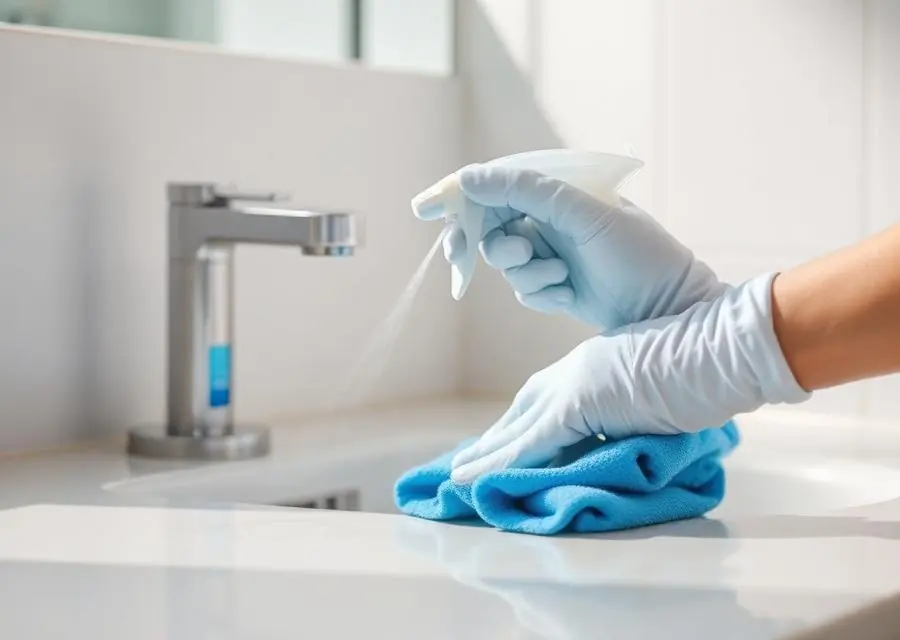
Most people over-index on chemistry and under-index on mechanics. A quality microfiber cloth with clean water removes the large majority of household soil and bacteria through physical capture, because the split fibers trap particles rather than pushing them around. Cotton rags and paper towels smear where microfiber lifts.
The rules are simple: use separate colors for bathrooms, kitchens and general surfaces to prevent cross-contamination, fold each cloth into quarters and rotate to a clean face as you work, wash without fabric softener because softener clogs the fibers, and retire cloths when they stop grabbing. Professional teams change cloths between rooms rather than carrying one around the house.
Cleaning versus disinfecting: they are different jobs
Cleaning removes soil and the majority of germs with it. Disinfecting kills specific organisms on an already-clean surface. Applying disinfectant to a dirty surface largely wastes the product because organic matter deactivates it, which is why the professional sequence is always clean first, then disinfect.
Disinfectants also require dwell time — the surface must stay visibly wet for the period stated on the label, commonly one to ten minutes. Spraying and immediately wiping does almost nothing. And most homes do not need daily disinfection everywhere; high-touch points, bathrooms and kitchen surfaces after raw meat handling are the places it genuinely matters.
Room-by-room green approach
Kitchens: plant-based degreaser for counters and cabinets, citric acid for the sink and faucet, hydrogen peroxide or a registered botanical disinfectant on food-prep surfaces after raw protein, enzyme cleaner down the disposal weekly.
Bathrooms: acid descaler on glass, tile and chrome, peroxide-based cleaner on the toilet and floor, enzyme spray for lingering odor around the base and drain. Living areas: microfiber and water for dusting, HEPA vacuuming twice weekly in pet households, and a damp microfiber mop with a diluted neutral cleaner on hard floors — avoid vinegar on hardwood and stone.
Where conventional chemistry is still the right choice
Honesty matters more than ideology. Active mold remediation, sewage backups, some medical and clinical settings and severe biological contamination call for EPA-registered disinfectants used correctly. Refusing effective chemistry in those situations is not safer; it is just less effective.
The realistic goal is not zero chemicals, it is right-sized chemistry: the gentlest product that fully does the job, used with proper ventilation, correct dilution and adequate dwell time. That approach removes the vast majority of unnecessary exposure without pretending the difficult cases do not exist.
Working with a green cleaning service
If you want green service, be specific. Ask which products the company uses, whether they can go fragrance-free, whether they use microfiber and HEPA filtration, and how they handle disinfection. Ask them to bring the actual product list rather than accepting the word "green," which has no regulated meaning in this industry.
At Checked In Cleaning we accommodate fragrance-free and pet-safe protocols on request across the Bay Area, use color-coded microfiber to prevent cross-contamination, and will tell you plainly when a job genuinely calls for stronger chemistry. Tell us about your household — kids, pets, allergies, sensitivities — and we will build the scope around it.
Frequently asked
Quick answers
Do eco-friendly products disinfect as well as bleach?
Hydrogen peroxide and registered botanical disinfectants such as thymol are effective when used with correct dwell time. Vinegar is not a disinfectant. For severe biological contamination, EPA-registered products remain the right choice.
Are essential oils safe around pets?
Not universally. Tea tree, several citrus oils, pine and eucalyptus can be toxic to cats in particular. Fragrance-free protocols are the safest option in pet households.
Can I request fragrance-free cleaning?
Yes. Ask when booking and we will use unscented products throughout, which is common for allergy, asthma and chemical-sensitivity households.